 Chaos: Making a New Science
Score Classic
What it's about
In the 1960s and 70s, a scattered group of scientists began noticing order hidden in disorder: in weather, dripping faucets, turbulent water, animal populations and heartbeats. James Gleick tells the story of chaos theory, from the meteorologist who discovered the 'butterfly effect' to Benoit Mandelbrot's fractals, and the scientists who built a new way of seeing nature.
Why it's worth reading
It was a finalist for both the Pulitzer Prize and the National Book Award and made chaos theory famous. It's a clear, exciting story of scientific discovery.
You'll love it if you liked
 Genius: The Life and Science of Richard Feynman
 The Structure of Scientific Revolutions
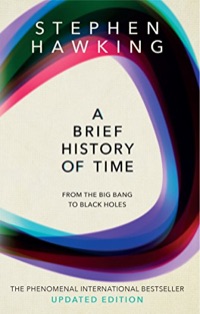 A Brief History of Time
Good to know
No math is needed, though some chapters get abstract. It's from 1987, so the field has moved on.
By the numbers
- Readers51 out of 100 · counts 42%
- Critics51 out of 100 · counts 34% (its stronger lane)
- Bestseller23 out of 100 · counts 14%
- Buzz0 out of 100 · counts 10%
Critics and Bestseller are two ways to earn a place: a book's stronger one counts more. Buzz rewards recent bestseller weeks and prizes, so older books start at zero. The parts combine into the Must-Read Score, shown on a scale where the best book we found scores 99 and the last book to make the ranking scores 50.
Where it ranks
- #72 of the 119 science and ideas books we rank
- #376 of the 762 classics we rank
- #1285 of the 2,816 books we rank
Why it made the list
Reads as
True story, Thought-provoking
More by James Gleick
 The Information: A History, a Theory, a FloodGenius: The Life and Science of Richard Feynman
 Isaac Newton
If you like this, read next
 Ender's Game
 The Making of the Atomic Bomb
 Dune
 The Lord of the Rings
 How to Win Friends and Influence People
 Gödel, Escher, Bach: An Eternal Golden Braid
Explore the best-of lists
All 36 best-of lists →
 Science and ideas booksTop 25 · 119 ranked
 Classic booksTop 25 · 762 ranked
 Books of the 1980sTop 25 · 202 ranked

 Fantasy booksTop 25 · 459 ranked
 Mysteries and thrillersTop 25 · 555 ranked
 Literary novelsTop 25 · 309 ranked

 Memoirs and biographiesTop 25 · 290 ranked
 Science fiction booksTop 25 · 313 ranked
Quick answers
Is Chaos: Making a New Science worth reading?
Yes. It was a finalist for both the Pulitzer Prize and the National Book Award and made chaos theory famous. It ranks #1,285 of the 2,816 books in our ranking, with a Must-Read Score of 70.1 (the best book we found scores 99).
What is Chaos: Making a New Science about?
In the 1960s and 70s, a scattered group of scientists began noticing order hidden in disorder: in weather, dripping faucets, turbulent water, animal populations and heartbeats. James Gleick tells the story of chaos theory, from the meteorologist who discovered the 'butterfly effect' to Benoit Mandelbrot's fractals, and the scientists who built a new way of seeing nature.
How long does it take to read Chaos: Making a New Science?
About 7 hours (274 pages), or about 2 weeks at 30 minutes a day.
What should I read after Chaos: Making a New Science?
If you liked it, try Genius: The Life and Science of Richard Feynman by James Gleick, The Structure of Scientific Revolutions by Thomas S. Kuhn or A Brief History of Time by Stephen Hawking.