 The Structure of Scientific Revolutions
Score Classic
What it's about
Thomas Kuhn argues that science doesn't advance in a steady march. Most of the time scientists work within a shared framework, a 'paradigm', solving puzzles it defines. Problems pile up until a crisis comes and a revolution replaces the old framework with a new one, as when Copernicus overturned the earth-centered universe or Einstein reshaped Newton's physics.
Why it's worth reading
It's on the Modern Library and Guardian lists of the best nonfiction of all time, and it gave the world the phrase 'paradigm shift'. It changed how we think about how knowledge works.
You'll love it if you liked
 The Selfish Gene
 On the Origin of Species
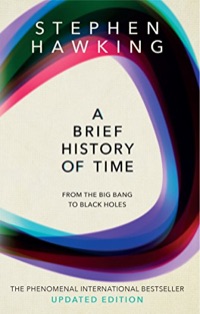 A Brief History of Time
Good to know
It's short but academic, and some sections are hard going. Recent editions include a helpful introduction.
By the numbers
- Readers48 out of 100 · counts 42%
- Critics92 out of 100 · counts 34% (its stronger lane)
- Bestseller23 out of 100 · counts 14%
- Buzz0 out of 100 · counts 10%
Critics and Bestseller are two ways to earn a place: a book's stronger one counts more. Buzz rewards recent bestseller weeks and prizes, so older books start at zero. The parts combine into the Must-Read Score, shown on a scale where the best book we found scores 99 and the last book to make the ranking scores 50.
Where it ranks
Why it made the list
Reads as
Thought-provoking, True story
If you like this, read next
 The Lord of the Rings
 Cosmos
 The Right Stuff
 And the Band Played On: Politics, People, and the AIDS Epidemic
 The Mismeasure of Man
 The Feminine Mystique
Explore the best-of lists
All 36 best-of lists →


















Quick answers
Is The Structure of Scientific Revolutions worth reading?
Yes. It's on the Modern Library and Guardian lists of the best nonfiction of all time, and it gave the world the phrase 'paradigm shift'. It ranks #562 of the 2,816 books in our ranking, with a Must-Read Score of 77.6 (the best book we found scores 99).
What is The Structure of Scientific Revolutions about?
Thomas Kuhn argues that science doesn't advance in a steady march. Most of the time scientists work within a shared framework, a 'paradigm', solving puzzles it defines. Problems pile up until a crisis comes and a revolution replaces the old framework with a new one, as when Copernicus overturned the earth-centered universe or Einstein reshaped Newton's physics.
How long does it take to read The Structure of Scientific Revolutions?
About 7 hours (263 pages), or about 2 weeks at 30 minutes a day.
What should I read after The Structure of Scientific Revolutions?
If you liked it, try The Selfish Gene by Richard Dawkins, On the Origin of Species by Charles Darwin or A Brief History of Time by Stephen Hawking.