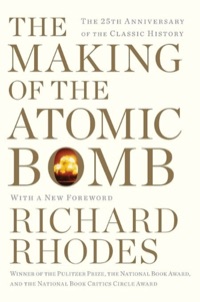
 The Making of the Atomic Bomb
Score Classic
What it's about
The full story of how the atomic bomb came to be, from the discovery around 1900 that atoms held unimaginable energy, through the physicists who raced to understand it, often fleeing Nazi Europe as they did, to the Manhattan Project at Los Alamos, the first test at Trinity, and the bombing of Hiroshima and Nagasaki. Richard Rhodes tells it as human drama, through Einstein, Bohr, Fermi, Szilard, Oppenheimer and dozens more.
Why it's worth reading
It's widely considered one of the greatest works of narrative history ever written, winning the Pulitzer Prize, the National Book Award and the NBCC Award. It explains the science clearly and never loses sight of the moral weight of what these people made.
You'll love it if you liked
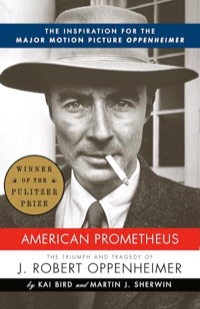 American Prometheus: The Triumph and Tragedy of J. Robert Oppenheimer
 The Right Stuff
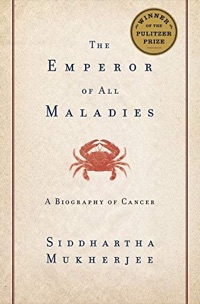 The Emperor of All Maladies: A Biography of Cancer
Good to know
At nearly 900 pages it's a commitment, and the early chapters go deep into physics. The final chapters on Hiroshima include harrowing survivor accounts.
By the numbers
- Readers98 out of 100 · counts 42%
- Critics98 out of 100 · counts 34% (its stronger lane)
- Bestseller23 out of 100 · counts 14%
- Buzz0 out of 100 · counts 10%
Critics and Bestseller are two ways to earn a place: a book's stronger one counts more. Buzz rewards recent bestseller weeks and prizes, so older books start at zero. The parts combine into the Must-Read Score, shown on a scale where the best book we found scores 99 and the last book to make the ranking scores 50.
Where it ranks
- #5 of the 198 history books we rank
- #5 of the 762 classics we rank
- #26 of the 2,816 books we rank
Why it made the list
Reads as
True story, Thought-provoking
If you like this, read next
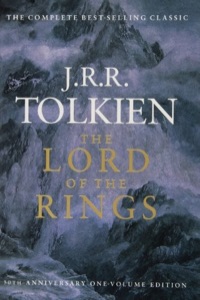 The Lord of the Rings
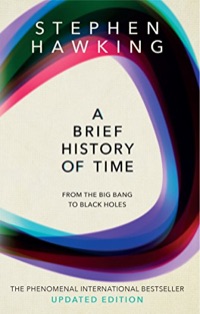 A Brief History of Time
 Cosmos
 And the Band Played On: Politics, People, and the AIDS Epidemic
 The Soul of a New Machine
 The Mismeasure of Man
Explore the best-of lists
All 36 best-of lists →









Quick answers
Is The Making of the Atomic Bomb worth reading?
Yes. It's widely considered one of the greatest works of narrative history ever written, winning the Pulitzer Prize, the National Book Award and the NBCC Award. It ranks #26 of the 2,816 books in our ranking, with a Must-Read Score of 91.1 (the best book we found scores 99).
What is The Making of the Atomic Bomb about?
The full story of how the atomic bomb came to be, from the discovery around 1900 that atoms held unimaginable energy, through the physicists who raced to understand it, often fleeing Nazi Europe as they did, to the Manhattan Project at Los Alamos, the first test at Trinity, and the bombing of Hiroshima and Nagasaki. Richard Rhodes tells it as human drama, through Einstein, Bohr, Fermi, Szilard, Oppenheimer and dozens more.
How long does it take to read The Making of the Atomic Bomb?
About 22 hours (896 pages), or about 6 weeks at 30 minutes a day.
What awards has The Making of the Atomic Bomb won?
Pulitzer Prize (General Nonfiction) winner (1988); National Book Award (Nonfiction) winner (1987); NBCC Award (Nonfiction) winner (1987).
What should I read after The Making of the Atomic Bomb?
If you liked it, try American Prometheus: The Triumph and Tragedy of J. Robert Oppenheimer by Kai Bird and Martin J. Sherwin, The Right Stuff by Tom Wolfe or The Emperor of All Maladies: A Biography of Cancer by Siddhartha Mukherjee.