 Cosmos
Score Classic
What it's about
Written alongside his landmark TV series, Carl Sagan's tour of the universe covers fifteen billion years of cosmic history: how stars are born and die, how life might have begun, what we've learned from planets and comets, and the long human story of how science pieced it all together, from ancient Greek astronomers to the Voyager spacecraft. Throughout, Sagan asks what our place is in a universe so vast.
Why it's worth reading
Sagan makes science feel like wonder, and his prose can make you see the night sky differently for the rest of your life. Some details have dated since 1980, but its spirit hasn't.
You'll love it if you liked
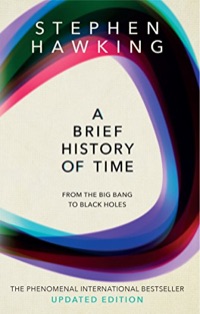 A Brief History of Time
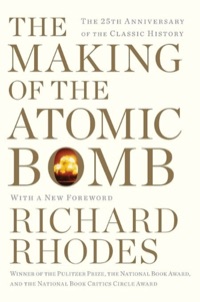 The Making of the Atomic Bomb
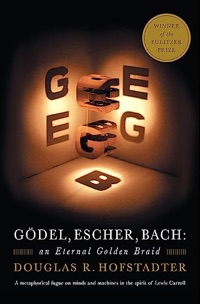 Gödel, Escher, Bach: An Eternal Golden Braid
Good to know
Some science is out of date (it predates exoplanets and dark energy), which most readers find part of its charm. No math is needed.
By the numbers
- Readers97 out of 100 · counts 42%
- Critics28 out of 100 · counts 14%
- Bestseller80 out of 100 · counts 34% (its stronger lane)
- Buzz0 out of 100 · counts 10%
Critics and Bestseller are two ways to earn a place: a book's stronger one counts more. Buzz rewards recent bestseller weeks and prizes, so older books start at zero. The parts combine into the Must-Read Score, shown on a scale where the best book we found scores 99 and the last book to make the ranking scores 50.
Where it ranks
- #6 of the 119 science and ideas books we rank
- #15 of the 198 history books we rank
- #21 of the 762 classics we rank
- #71 of the 2,816 books we rank
Why it made the list
Reads as
True story, Thought-provoking
More by Carl Sagan
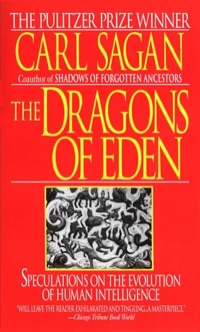 The Dragons of Eden
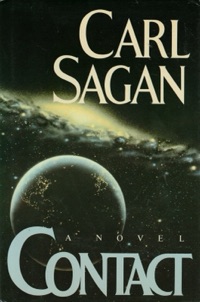 Contact
 Broca's Brain: Reflections on the Romance of Science
If you like this, read next
 The Lord of the Rings
 The Right Stuff
 And the Band Played On: Politics, People, and the AIDS Epidemic
 The Mismeasure of Man
 The Structure of Scientific Revolutions
 On the Origin of Species
Explore the best-of lists
All 36 best-of lists →









Quick answers
Is Cosmos worth reading?
Yes. Sagan makes science feel like wonder, and his prose can make you see the night sky differently for the rest of your life. It ranks #71 of the 2,816 books in our ranking, with a Must-Read Score of 87.7 (the best book we found scores 99).
What is Cosmos about?
Written alongside his landmark TV series, Carl Sagan's tour of the universe covers fifteen billion years of cosmic history: how stars are born and die, how life might have begun, what we've learned from planets and comets, and the long human story of how science pieced it all together, from ancient Greek astronomers to the Voyager spacecraft. Throughout, Sagan asks what our place is in a universe so vast.
How long does it take to read Cosmos?
About 11 hours (450 pages), or about 3 weeks at 30 minutes a day.
What should I read after Cosmos?
If you liked it, try A Brief History of Time by Stephen Hawking, The Making of the Atomic Bomb by Richard Rhodes or Gödel, Escher, Bach: An Eternal Golden Braid by Douglas Hofstadter.