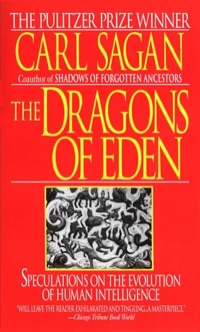
 The Dragons of Eden
Score Classic
What it's about
Carl Sagan, the astronomer and host of Cosmos, sets out to explain how human intelligence evolved. He explains the structure of the brain and what each part might have contributed, and asks what language, dreams, myths and our fear of reptiles might reveal about our evolutionary past. He also considers whether other animals, and computers, might be intelligent, and opens with his famous "cosmic calendar" compressing the history of the universe into a single year.
Why it's worth reading
It won the Pulitzer Prize for general nonfiction. Sagan was one of the great science communicators, and his curiosity is infectious.
You'll love it if you liked
 Six Easy Pieces
 The Lives of a Cell
 Rendezvous with Rama
Good to know
Some of its science, especially about the brain, is out of date. It's short.
By the numbers
- Readers77 out of 100 · counts 42%
- Critics67 out of 100 · counts 34% (its stronger lane)
- Bestseller15 out of 100 · counts 14%
- Buzz0 out of 100 · counts 10%
Critics and Bestseller are two ways to earn a place: a book's stronger one counts more. Buzz rewards recent bestseller weeks and prizes, so older books start at zero. The parts combine into the Must-Read Score, shown on a scale where the best book we found scores 99 and the last book to make the ranking scores 50.
Where it ranks
Why it made the list
Reads as
Thought-provoking
More by Carl Sagan
 Cosmos
 Contact
 Broca's Brain: Reflections on the Romance of Science
If you like this, read next
 To Kill a Mockingbird
 The Power Broker: Robert Moses and the Fall of New York
 The Color Purple
 1984
 The Lord of the Rings
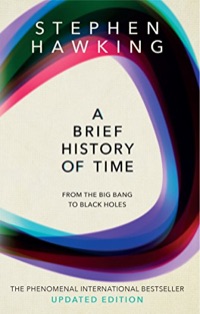 A Brief History of Time
Explore the best-of lists
All 36 best-of lists →















Quick answers
Is The Dragons of Eden worth reading?
Yes. It won the Pulitzer Prize for general nonfiction. It ranks #431 of the 2,816 books in our ranking, with a Must-Read Score of 79.3 (the best book we found scores 99).
What is The Dragons of Eden about?
Carl Sagan, the astronomer and host of Cosmos, sets out to explain how human intelligence evolved. He explains the structure of the brain and what each part might have contributed, and asks what language, dreams, myths and our fear of reptiles might reveal about our evolutionary past. He also considers whether other animals, and computers, might be intelligent, and opens with his famous "cosmic calendar" compressing the history of the universe into a single year.
How long does it take to read The Dragons of Eden?
About 7 hours (289 pages), or about 2 weeks at 30 minutes a day.
What awards has The Dragons of Eden won?
Pulitzer Prize (General Nonfiction) winner (1978).
What should I read after The Dragons of Eden?
If you liked it, try Six Easy Pieces by Richard P. Feynman, The Lives of a Cell by Lewis Thomas or Rendezvous with Rama by Arthur C. Clarke.