 The Swerve: How the World Became Modern
Score Modern
What it's about
In 1417, an Italian book hunter named Poggio Bracciolini found, in a German monastery, a copy of On the Nature of Things, a long-lost Roman poem by Lucretius. It argued that the universe is made of atoms, that there are no gods guiding it and no afterlife, and that the purpose of life is pleasure. Stephen Greenblatt tells the story of the find and argues it helped start the modern world.
Why it's worth reading
It won both the Pulitzer Prize and the National Book Award. It's a lively adventure about books and ideas.
You'll love it if you liked
 The Name of the Rose
 A Distant Mirror: The Calamitous 14th Century
 The Structure of Scientific Revolutions
Good to know
Many historians criticize its picture of the Middle Ages as too dark and its main claim as overstated.
By the numbers
- Readers22 out of 100 · counts 42%
- Critics87 out of 100 · counts 34% (its stronger lane)
- Bestseller45 out of 100 · counts 14%
- Buzz1 out of 100 · counts 10%
Critics and Bestseller are two ways to earn a place: a book's stronger one counts more. Buzz rewards recent bestseller weeks and prizes, so older books start at zero. The parts combine into the Must-Read Score, shown on a scale where the best book we found scores 99 and the last book to make the ranking scores 50.
Where it ranks
- #142 of the 198 history books we rank
- #567 of the 1,573 modern books we rank
- #1082 of the 2,816 books we rank
Why it made the list
Reads as
Thought-provoking, True story
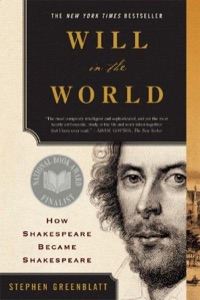
More by Stephen Greenblatt
If you like this, read next
 The Book Thief
 Americanah
 Secondhand Time: The Last of the Soviets
 Angela's Ashes
 My Brilliant Friend
 Voices From Chernobyl: The Oral History of a Nuclear Disaster
Explore the best-of lists
All 36 best-of lists →







Quick answers
Is The Swerve: How the World Became Modern worth reading?
Yes. It won both the Pulitzer Prize and the National Book Award. It ranks #1,082 of the 2,816 books in our ranking, with a Must-Read Score of 72.1 (the best book we found scores 99).
What is The Swerve: How the World Became Modern about?
In 1417, an Italian book hunter named Poggio Bracciolini found, in a German monastery, a copy of On the Nature of Things, a long-lost Roman poem by Lucretius. It argued that the universe is made of atoms, that there are no gods guiding it and no afterlife, and that the purpose of life is pleasure. Stephen Greenblatt tells the story of the find and argues it helped start the modern world.
How long does it take to read The Swerve: How the World Became Modern?
About 9 hours (356 pages), or about 3 weeks at 30 minutes a day.
What awards has The Swerve: How the World Became Modern won?
Pulitzer Prize (General Nonfiction) winner (2012); National Book Award (Nonfiction) winner (2011).
What should I read after The Swerve: How the World Became Modern?
If you liked it, try The Name of the Rose by Umberto Eco, A Distant Mirror: The Calamitous 14th Century by Barbara W. Tuchman or The Structure of Scientific Revolutions by Thomas S. Kuhn.