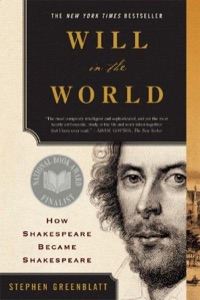
 Will in the World: How Shakespeare Became Shakespeare
Score Modern
What it's about
How did a glove-maker's son from a small town in the English Midlands become the greatest writer in the English language? Stephen Greenblatt pieces together what is known of Shakespeare's life, his childhood, marriage, years in London, the death of his son and his return home, and imagines how his world found its way into the plays.
Why it's worth reading
It was a finalist for both the Pulitzer Prize and the National Book Award. It's a lively, imaginative biography.
You'll love it if you liked
 Hamlet
 The Swerve: How the World Became Modern
 King Lear
Good to know
Much of it is informed speculation, since little is known for certain.
By the numbers
- Readers22 out of 100 · counts 42%
- Critics49 out of 100 · counts 34% (its stronger lane)
- Bestseller1 out of 100 · counts 14%
- Buzz0 out of 100 · counts 10%
Critics and Bestseller are two ways to earn a place: a book's stronger one counts more. Buzz rewards recent bestseller weeks and prizes, so older books start at zero. The parts combine into the Must-Read Score, shown on a scale where the best book we found scores 99 and the last book to make the ranking scores 50.
Where it ranks
- #259 of the 290 memoirs and biographies we rank
- #1260 of the 1,573 modern books we rank
- #2315 of the 2,816 books we rank
Why it made the list
Reads as
True story
More by Stephen Greenblatt
If you like this, read next
 Secondhand Time: The Last of the Soviets
 Angela's Ashes
 Voices From Chernobyl: The Oral History of a Nuclear Disaster
 Seabiscuit: An American Legend
 The Power Broker: Robert Moses and the Fall of New York
 Darkness Visible: A Memoir of Madness
Explore the best-of lists
All 36 best-of lists →









Quick answers
Is Will in the World: How Shakespeare Became Shakespeare worth reading?
Yes. It was a finalist for both the Pulitzer Prize and the National Book Award. It ranks #2,315 of the 2,816 books in our ranking, with a Must-Read Score of 60.6 (the best book we found scores 99).
What is Will in the World: How Shakespeare Became Shakespeare about?
How did a glove-maker's son from a small town in the English Midlands become the greatest writer in the English language? Stephen Greenblatt pieces together what is known of Shakespeare's life, his childhood, marriage, years in London, the death of his son and his return home, and imagines how his world found its way into the plays.
How long does it take to read Will in the World: How Shakespeare Became Shakespeare?
About 11 hours (430 pages), or about 3 weeks at 30 minutes a day.
What should I read after Will in the World: How Shakespeare Became Shakespeare?
If you liked it, try Hamlet by William Shakespeare, The Swerve: How the World Became Modern by Stephen Greenblatt or King Lear by William Shakespeare.