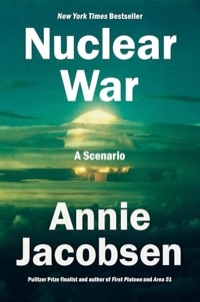
 Nuclear War: A Scenario
What it's about
Annie Jacobsen walks, minute by minute, through how a nuclear war could actually unfold. A single missile is launched toward the United States, and from there the clock runs through detection, the President's few minutes to decide, the counterstrikes and the world that is left afterward, all built from interviews with the officials, scientists and soldiers who have planned for it.
Why it's worth reading
It was a Baillie Gifford Prize finalist and one of the most talked-about nonfiction books of 2024. It reads like a thriller, and its point is sobering: the system is built to move faster than anyone can think.
You'll love it if you liked
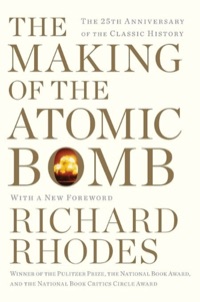 The Making of the Atomic Bomb
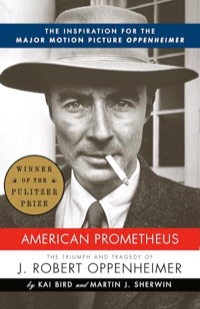 American Prometheus: The Triumph and Tragedy of J. Robert Oppenheimer
 Chernobyl: The History of a Nuclear Catastrophe
Good to know
The scenario is hypothetical, but the procedures and weapons are real and sourced. Many readers find it genuinely frightening.
By the numbers
- Readers88 out of 100 · counts 42%
- Critics24 out of 100 · counts 14%
- Bestseller54 out of 100 · counts 34% (its stronger lane)
- Buzz51 out of 100 · counts 10%
Critics and Bestseller are two ways to earn a place: a book's stronger one counts more. Buzz rewards recent bestseller weeks and prizes, so older books start at zero. The parts combine into the Must-Read Score, shown on a scale where the best book we found scores 99 and the last book to make the ranking scores 50.
Where it ranks
- #40 of the 198 history books we rank
- #40 of the 481 new books we rank
- #217 of the 2,816 books we rank
Why it made the list
Reads as
True story, Thought-provoking
More by Annie Jacobsen
If you like this, read next
 Poverty, by America
 The Big Short: Inside the Doomsday Machine
 How to Be an Antiracist
 Liar's Poker: Rising Through the Wreckage on Wall Street
 Fire Weather: A True Story From a Hotter World
 Everything Is Tuberculosis
Explore the best-of lists
All 36 best-of lists →







Quick answers
Is Nuclear War: A Scenario worth reading?
Yes. It was a Baillie Gifford Prize finalist and one of the most talked-about nonfiction books of 2024. It ranks #217 of the 2,816 books in our ranking, with a Must-Read Score of 83.2 (the best book we found scores 99).
What is Nuclear War: A Scenario about?
Annie Jacobsen walks, minute by minute, through how a nuclear war could actually unfold. A single missile is launched toward the United States, and from there the clock runs through detection, the President's few minutes to decide, the counterstrikes and the world that is left afterward, all built from interviews with the officials, scientists and soldiers who have planned for it.
How long does it take to read Nuclear War: A Scenario?
About 8 hours (301 pages), or about 2 weeks at 30 minutes a day.
What should I read after Nuclear War: A Scenario?
If you liked it, try The Making of the Atomic Bomb by Richard Rhodes, American Prometheus: The Triumph and Tragedy of J. Robert Oppenheimer by Kai Bird and Martin J. Sherwin or Chernobyl: The History of a Nuclear Catastrophe by Serhii Plokhy.