 Capital in the Twenty-First Century
Score Modern
What it's about
The economist Thomas Piketty gathered centuries of data on income and wealth across many countries and argues that, over the long run, the return on capital tends to grow faster than the economy as a whole, so inherited wealth piles up and inequality grows. The mid-twentieth century, when inequality fell, was the exception. He proposes a global tax on wealth.
Why it's worth reading
It hit #1 on the New York Times list, and the Guardian named it one of the best books of the 21st century. It changed the global conversation about inequality.
You'll love it if you liked
 Lords of Finance: The Bankers Who Broke the World
 Poverty, by America
 Dark Money
Good to know
It's around 700 pages, with many charts. Piketty writes clearly, and it's easier than it looks, but it's a commitment.
By the numbers
- Readers55 out of 100 · counts 42%
- Critics63 out of 100 · counts 14%
- Bestseller66 out of 100 · counts 34% (its stronger lane)
- Buzz2 out of 100 · counts 10%
Critics and Bestseller are two ways to earn a place: a book's stronger one counts more. Buzz rewards recent bestseller weeks and prizes, so older books start at zero. The parts combine into the Must-Read Score, shown on a scale where the best book we found scores 99 and the last book to make the ranking scores 50.
Where it ranks
- #37 of the 119 science and ideas books we rank
- #96 of the 198 history books we rank
- #283 of the 1,573 modern books we rank
- #565 of the 2,816 books we rank
Why it made the list
Reads as
True story, Thought-provoking
If you like this, read next
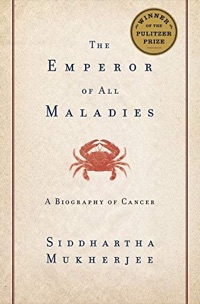 The Emperor of All Maladies: A Biography of Cancer
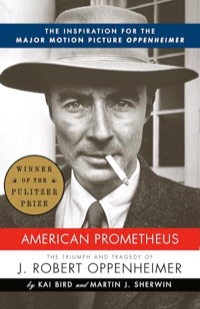 American Prometheus: The Triumph and Tragedy of J. Robert Oppenheimer
 Sapiens: A Brief History of Humankind
 The Sixth Extinction: An Unnatural History
 The Big Short: Inside the Doomsday Machine
 Barrayar
Explore the best-of lists
All 36 best-of lists →






Quick answers
Is Capital in the Twenty-First Century worth reading?
Yes. It hit #1 on the New York Times list, and the Guardian named it one of the best books of the 21st century. It ranks #565 of the 2,816 books in our ranking, with a Must-Read Score of 77.6 (the best book we found scores 99).
What is Capital in the Twenty-First Century about?
The economist Thomas Piketty gathered centuries of data on income and wealth across many countries and argues that, over the long run, the return on capital tends to grow faster than the economy as a whole, so inherited wealth piles up and inequality grows. The mid-twentieth century, when inequality fell, was the exception. He proposes a global tax on wealth.
How long does it take to read Capital in the Twenty-First Century?
About 17 hours (696 pages), or about 5 weeks at 30 minutes a day.
What should I read after Capital in the Twenty-First Century?
If you liked it, try Lords of Finance: The Bankers Who Broke the World by Liaquat Ahamed, Poverty, by America by Matthew Desmond or Dark Money by Jane Mayer.