 The Sixth Extinction: An Unnatural History
Score Modern
What it's about
Elizabeth Kolbert, a New Yorker staff writer, sets out to explain the five mass extinctions in Earth's history and to argue that humans are now causing a sixth. Each chapter follows one species, living or lost, and the scientists studying it: the golden frogs of Panama vanishing to a fungus, the American mastodon, the great auk hunted to its end, the corals of the Great Barrier Reef, and the Sumatran rhino. She travels to rainforests, reefs and laboratories to report it firsthand.
Why it's worth reading
It won the Pulitzer Prize for general nonfiction and is on the Guardian's lists of the best nonfiction ever written. Kolbert makes hard science clear and even funny without softening how serious the subject is.
You'll love it if you liked
 Silent Spring
 The Omnivore's Dilemma: A Natural History of Four Meals
 An Immense World: How Animal Senses Reveal the Hidden Realms Around Us
Good to know
Each chapter stands mostly on its own, so it's easy to read in pieces. It's sobering but not preachy.
By the numbers
- Readers71 out of 100 · counts 42%
- Critics94 out of 100 · counts 34% (its stronger lane)
- Bestseller49 out of 100 · counts 14%
- Buzz3 out of 100 · counts 10%
Critics and Bestseller are two ways to earn a place: a book's stronger one counts more. Buzz rewards recent bestseller weeks and prizes, so older books start at zero. The parts combine into the Must-Read Score, shown on a scale where the best book we found scores 99 and the last book to make the ranking scores 50.
Where it ranks
- #11 of the 119 science and ideas books we rank
- #20 of the 198 history books we rank
- #64 of the 1,573 modern books we rank
- #115 of the 2,816 books we rank
Why it made the list
Reads as
True story, Thought-provoking
If you like this, read next
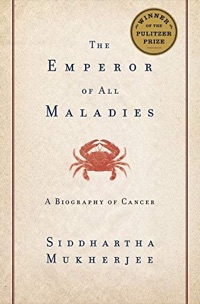 The Emperor of All Maladies: A Biography of Cancer
 American Prometheus: The Triumph and Tragedy of J. Robert Oppenheimer
 Sapiens: A Brief History of Humankind
 The Big Short: Inside the Doomsday Machine
 Barrayar
 How to Be an Antiracist
Explore the best-of lists
All 36 best-of lists →









Quick answers
Is The Sixth Extinction: An Unnatural History worth reading?
Yes. It won the Pulitzer Prize for general nonfiction and is on the Guardian's lists of the best nonfiction ever written. It ranks #115 of the 2,816 books in our ranking, with a Must-Read Score of 86.2 (the best book we found scores 99).
What is The Sixth Extinction: An Unnatural History about?
Elizabeth Kolbert, a New Yorker staff writer, sets out to explain the five mass extinctions in Earth's history and to argue that humans are now causing a sixth. Each chapter follows one species, living or lost, and the scientists studying it: the golden frogs of Panama vanishing to a fungus, the American mastodon, the great auk hunted to its end, the corals of the Great Barrier Reef, and the Sumatran rhino. She travels to rainforests, reefs and laboratories to report it firsthand.
How long does it take to read The Sixth Extinction: An Unnatural History?
About 8 hours (319 pages), or about 2 weeks at 30 minutes a day.
What awards has The Sixth Extinction: An Unnatural History won?
Pulitzer Prize (General Nonfiction) winner (2015).
What should I read after The Sixth Extinction: An Unnatural History?
If you liked it, try Silent Spring by Rachel Carson, The Omnivore's Dilemma: A Natural History of Four Meals by Michael Pollan or An Immense World: How Animal Senses Reveal the Hidden Realms Around Us by Ed Yong.