 Savage Inequalities: Children in America's Schools
Score Modern
What it's about
Jonathan Kozol spent two years visiting public schools across America, in East St. Louis, Chicago, New York, Camden and San Antonio, and compared them with schools in wealthy suburbs a few miles away. He found crumbling buildings, sewage in the halls, missing textbooks and overcrowded classes in poor, mostly Black and Hispanic districts, and he shows how school funding through local property taxes keeps it that way.
Why it's worth reading
It was a finalist for the National Book Critics Circle Award and is a classic of education writing. It's angry and impossible to forget.
You'll love it if you liked
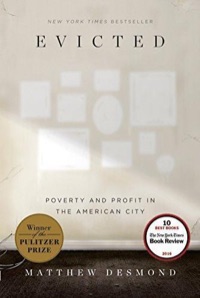 Evicted: Poverty and Profit in the American City
 Poverty, by America
 The Warmth of Other Suns: The Epic Story of America's Great Migration
Good to know
It was published in 1991, so the statistics are old, though many of the patterns remain.
By the numbers
- Readers87 out of 100 · counts 42%
- Critics24 out of 100 · counts 34% (its stronger lane)
- Bestseller7 out of 100 · counts 14%
- Buzz0 out of 100 · counts 10%
Critics and Bestseller are two ways to earn a place: a book's stronger one counts more. Buzz rewards recent bestseller weeks and prizes, so older books start at zero. The parts combine into the Must-Read Score, shown on a scale where the best book we found scores 99 and the last book to make the ranking scores 50.
Where it ranks
- #548 of the 1,573 modern books we rank
- #1055 of the 2,816 books we rank
Why it made the list
If you like this, read next
Explore the best-of lists
All 36 best-of lists →











Quick answers
Is Savage Inequalities: Children in America's Schools worth reading?
Yes. It was a finalist for the National Book Critics Circle Award and is a classic of education writing. It ranks #1,055 of the 2,816 books in our ranking, with a Must-Read Score of 72.4 (the best book we found scores 99).
What is Savage Inequalities: Children in America's Schools about?
Jonathan Kozol spent two years visiting public schools across America, in East St. Louis, Chicago, New York, Camden and San Antonio, and compared them with schools in wealthy suburbs a few miles away. He found crumbling buildings, sewage in the halls, missing textbooks and overcrowded classes in poor, mostly Black and Hispanic districts, and he shows how school funding through local property taxes keeps it that way.
How long does it take to read Savage Inequalities: Children in America's Schools?
About 7 hours (272 pages), or about 2 weeks at 30 minutes a day.
What should I read after Savage Inequalities: Children in America's Schools?
If you liked it, try Evicted: Poverty and Profit in the American City by Matthew Desmond, Poverty, by America by Matthew Desmond or The Warmth of Other Suns: The Epic Story of America's Great Migration by Isabel Wilkerson.