 Question 7
What it's about
Richard Flanagan's father was a prisoner of war forced to work as a slave laborer in Japan, and he survived because the atomic bomb ended the war. Flanagan follows a chain of events backward and forward: the novelist H. G. Wells, who imagined atomic bombs; the physicist Leo Szilard, who read him and helped make them; his parents' lives in Tasmania; and the day Flanagan himself nearly drowned in a river as a young man.
Why it's worth reading
It won the Baillie Gifford Prize. It's an unusual, beautiful book, part memoir and part history, about how lives connect.
You'll love it if you liked
 The Narrow Road to the Deep North
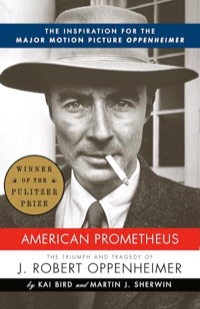 American Prometheus: The Triumph and Tragedy of J. Robert Oppenheimer
 When We Cease to Understand the World
Good to know
It moves freely between stories and times rather than in order. It's short.
By the numbers
- Readers55 out of 100 · counts 42%
- Critics54 out of 100 · counts 34% (its stronger lane)
- Bestseller2 out of 100 · counts 14%
- Buzz51 out of 100 · counts 10%
Critics and Bestseller are two ways to earn a place: a book's stronger one counts more. Buzz rewards recent bestseller weeks and prizes, so older books start at zero. The parts combine into the Must-Read Score, shown on a scale where the best book we found scores 99 and the last book to make the ranking scores 50.
Where it ranks
- #159 of the 290 memoirs and biographies we rank
- #175 of the 481 new books we rank
- #998 of the 2,816 books we rank
Why it made the list
Reads as
True story, Moving
More by Richard Flanagan
If you like this, read next
 Challenger: A True Story of Heroism and Disaster on the Edge of Space
 Oath and Honor: A Memoir and a Warning
 Elon Musk
 Between the World and Me
 The Escape Artist
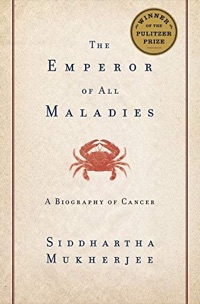 The Emperor of All Maladies: A Biography of Cancer
Explore the best-of lists
All 36 best-of lists →







Quick answers
Is Question 7 worth reading?
Yes. It won the Baillie Gifford Prize. It ranks #998 of the 2,816 books in our ranking, with a Must-Read Score of 73.0 (the best book we found scores 99).
What is Question 7 about?
Richard Flanagan's father was a prisoner of war forced to work as a slave laborer in Japan, and he survived because the atomic bomb ended the war. Flanagan follows a chain of events backward and forward: the novelist H. G. Wells, who imagined atomic bombs; the physicist Leo Szilard, who read him and helped make them; his parents' lives in Tasmania; and the day Flanagan himself nearly drowned in a river as a young man.
How long does it take to read Question 7?
About 7 hours (290 pages), or about 2 weeks at 30 minutes a day.
What awards has Question 7 won?
Baillie Gifford Prize winner (2024).
What should I read after Question 7?
If you liked it, try The Narrow Road to the Deep North by Richard Flanagan, American Prometheus: The Triumph and Tragedy of J. Robert Oppenheimer by Kai Bird and Martin J. Sherwin or When We Cease to Understand the World by Benjamín Labatut.